Empowering women entrepreneurs requires more than encouraging them to start businesses. It means creating an environment where they can access capital, leverage technology, reach markets and build enterprises that are sustainable, competitive and capable of driving economic growth.
Every year on 19 November, the world celebrates Women’s Entrepreneurship Day, recognising women who are turning ideas into businesses, creating employment and developing innovative solutions to challenges within their communities.
It is an important opportunity to celebrate their achievements, but also to reflect on a bigger question: are we creating the conditions that enable women-owned businesses to grow beyond survival and become sustainable, competitive enterprises?
In Zambia, women play a significant role in entrepreneurship. Yet, starting a business and successfully growing one are two very different journeys. Access to finance, limited market opportunities, inadequate business networks and gaps in technical capabilities continue to influence how far many women-led enterprises can go.
For many entrepreneurs, the challenge is not necessarily a lack of ideas or ambition. It is having the resources, networks and institutional support to turn those ideas into viable businesses. Access to affordable financing remains particularly important, as many women-owned businesses struggle with collateral requirements, limited credit histories and financing products that do not adequately reflect their realities.
However, capital alone is not enough. Businesses also need the capabilities to manage growth, reach customers, adopt technology and respond to changing market conditions.
Technology presents an important opportunity to address some of these challenges. Digital platforms, artificial intelligence and data analytics are changing how businesses operate, compete and connect with customers. For women entrepreneurs, these tools can improve productivity, streamline operations, strengthen customer relationships and open access to markets beyond their immediate geographical locations.
But digital inclusion must go beyond having a social media account or accepting mobile money payments. The real opportunity lies in integrating technology into business models, using data to make informed decisions and adopting digital solutions that create measurable business value. Women entrepreneurs must be equipped not just to use technology, but to leverage it as a driver of business growth.
Equally important is market access. A business can have a promising product and a strong business model, but without access to customers, supply chains, investors and commercial networks, its growth potential remains limited. Building stronger connections between emerging women-led enterprises and established businesses, financial institutions and markets must therefore become a priority.
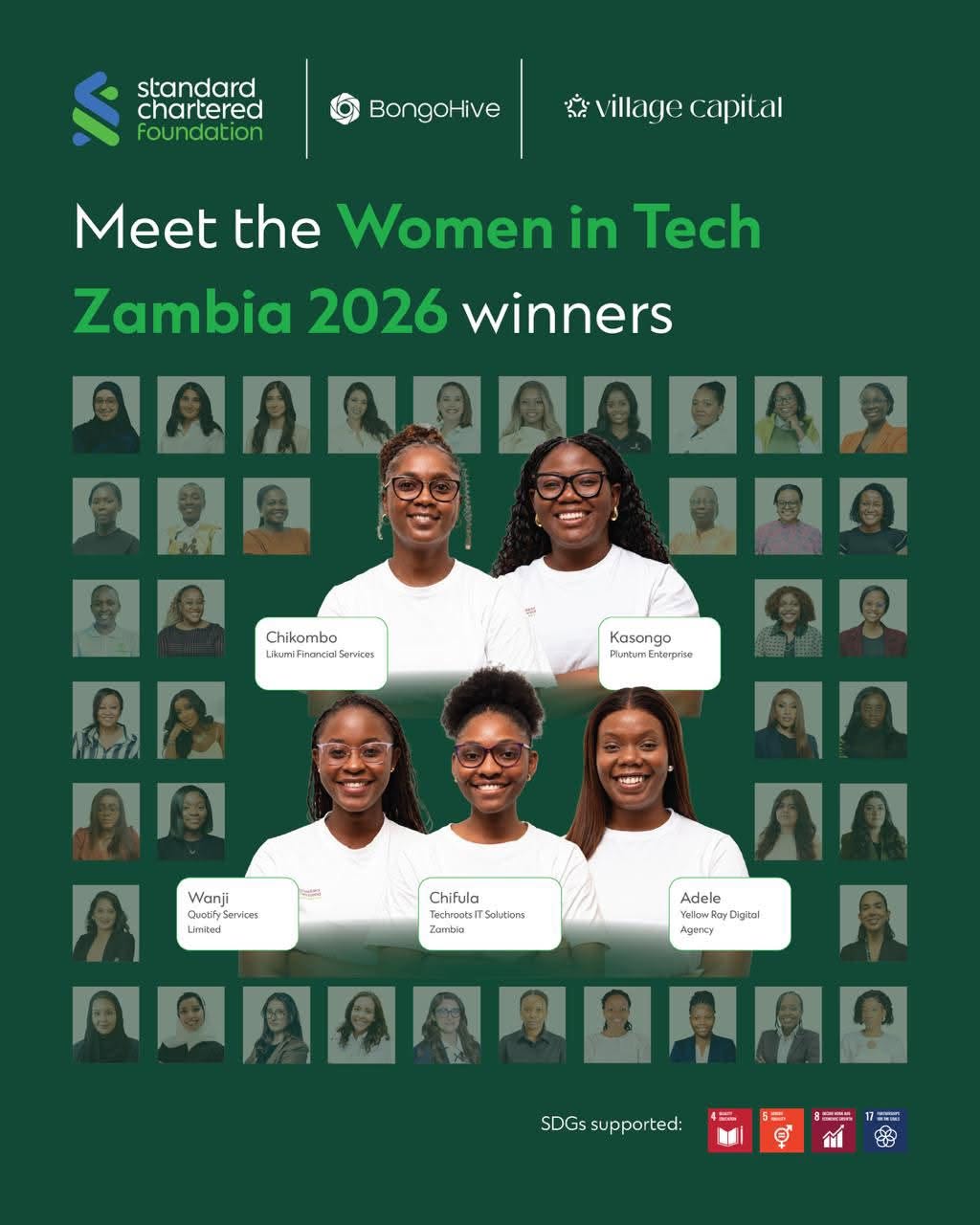
At BongoHive, our experience implementing the Women in Tech Zambia Accelerator reinforces the importance of taking a more holistic approach to entrepreneurship support. Through the programme, women-led businesses receive structured acceleration, mentorship, technical and business development support, networking opportunities and equity-free funding. The programme also provides post-acceleration support, recognising that the journey towards sustainable growth continues long after formal training ends.
The focus extends beyond helping women establish businesses. It is about strengthening enterprises that use technology to solve problems, improve operational efficiency, access markets and create opportunities for growth. This reflects a broader understanding that successful entrepreneurship requires more than an initial business idea. It requires the right combination of skills, capital, technology and connections.
As Zambia continues to strengthen its innovation and entrepreneurship ecosystem, we must also reconsider how we measure the success of initiatives supporting women entrepreneurs. The number of women trained or businesses enrolled in accelerator programmes is important, but the more meaningful indicators are whether businesses are increasing revenue, attracting investment, creating jobs, adopting technology and accessing new markets.
Creating an environment where women entrepreneurs can thrive is a shared responsibility. Government, financial institutions, corporates, investors, technology providers and entrepreneurship support organisations all have a role to play in removing barriers and creating meaningful opportunities.
Women’s Entrepreneurship Day should therefore be more than an annual celebration. It should be a reminder that supporting women in business is not simply a gender equality objective; it is an economic development opportunity.
When women-led businesses grow, they contribute to employment, innovation, household incomes and a more diversified economy.
The next chapter of women’s entrepreneurship must move beyond celebrating business creation to enabling business growth. Because the real measure of progress is not simply how many women start businesses, but how many are given the opportunity to build enterprises that endure, compete, create value and shape the future of our economy.