 BongoHive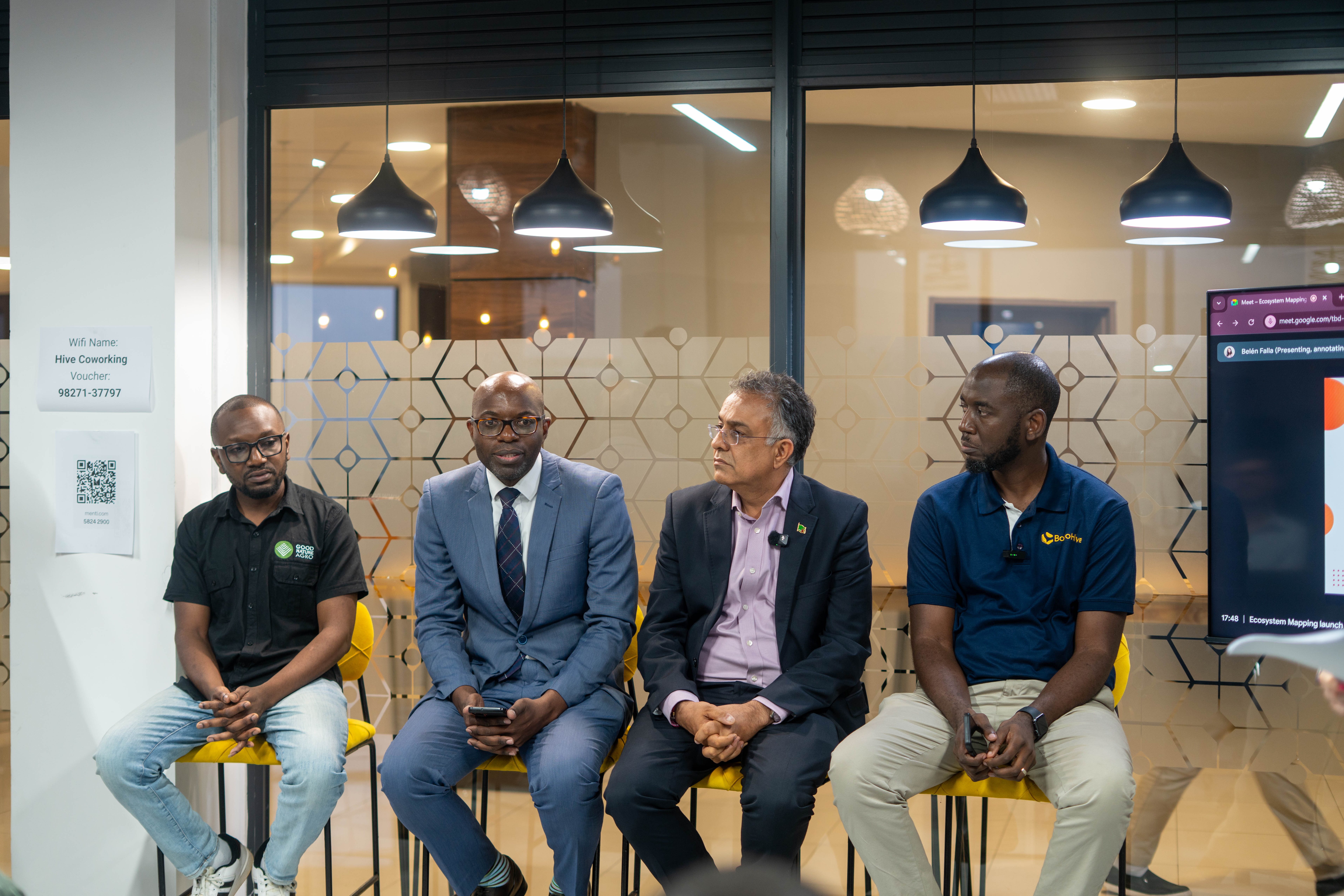
BongoHive convened leaders from across technology, finance, manufacturing, agriculture, and the innovation ecosystem for an Ecosystem Mapping Launch and Industry Dialogue focused on the future of artificial intelligence in Zambia. The event marked the official launch of a new report developed in partnership with PARIS21 and Ubuntu AI, aimed at advancing the localisation of Zambian languages through artificial intelligence.
Presenting the findings, Mapalo Lukashi underscored the broader importance of the work, noting that local language AI is not only a technical achievement but also a matter of inclusion and access. He emphasised that technology must reflect the realities and lived experiences of the people it serves. Hannah Hanamwanza-Redders added that the report provides a practical roadmap for organisations seeking to move beyond experimentation and toward meaningful AI implementation.
The launch also represented a significant milestone for the BongoHive AI Lab. Lukonga Lindunda observed that much of Zambia’s AI work has historically existed in isolated pockets. He explained that the initiative signals a shift toward coordinated, industry-led adoption that delivers tangible value across sectors.
A key highlight of the event was the live demonstration session, which showcased practical applications drawn from the report. John Emeka Eze demonstrated a Chichewa Text-to-SQL solution, illustrating how users can query complex datasets using natural local language. Nchimunya Munyama presented the MAWU App, showing how AI-powered interfaces can make digital platforms more accessible to local users. Tariro Faith Munzwa showcased an AI-enabled maternal health system and highlighted how AI can help bridge critical information gaps for mothers by delivering timely and understandable support in familiar languages.
The industry panel discussion, moderated by Pendo Manjele, co-founder of Ubuntu AI, offered cross-sector perspectives on AI adoption. Opening the conversation, Manjele noted that local language AI is foundational to meaningful uptake, adding that innovation cannot scale if people are unable to interact with it effectively.
Panelists shared insights from their respective sectors. Francis Mumbi spoke on the financial industry, emphasising AI’s role in enabling institutions to shift from reactive to predictive decision-making. Parity Chizela highlighted opportunities in agriculture, noting that AI can equip farmers with insights that improve productivity and resilience. Representing manufacturing, Ashu Sagar stressed the urgency of adoption, stating that AI is now essential for competitiveness. From the innovation ecosystem perspective, Lukonga Lindunda reiterated the importance of collaboration in positioning Zambia as not just an AI consumer but an AI creator. Khumbuzo Nkunika further reflected on the role of digital transformation in improving service delivery and supporting national development.
The evening concluded with a networking cocktail reception accompanied by a live band, creating space for connection and collaboration. As discussions continued and partnerships began to take shape, the atmosphere reflected a shared sense that Zambia is entering a pivotal moment in its AI journey.
More than a report launch, the Ecosystem Mapping Launch and Industry Dialogue marked a defining step toward real-world AI application. It signalled Zambia’s readiness to build solutions that speak local languages, address local challenges, and support inclusive national growth.