By Mariah Tembo
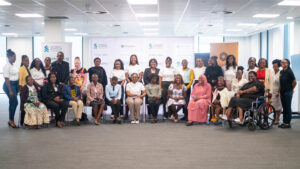
Every year, a new cohort begins, and it brings a familiar, exciting challenge. In my work managing the Women in Tech Zambia Accelerator Programme, an initiative we proudly implement alongside partners Standard Chartered Bank and Village Capital, we meet different founders who present their different innovative ventures.
In any given week, I might find myself talking to an entrepreneur building an AI-driven data platform, followed by a founder running an essential, hyper-local service like a school transport automation service. This diversity is our greatest strength, but it also poses an important question for ecosystem building, which is: How do you build a single programme structure that delivers deep, meaningful value to businesses operating across completely different sectors?
The answer lies in a validation of something we live by at BongoHive, which is that a successful accelerator cannot be rigid. It must be structured enough to guide, yet flexible enough to pivot when needed. A sector-agnostic approach requires a high-execution threshold; for example, a tech-based founder developing proprietary software has completely different network and structural needs than a tech-enabled founder replacing manual, paper-based administration with automated systems.
To bridge this gap, we move away from identical training pipelines and instead build a flexible foundation centred around scalable business fundamentals like market access, financial management, and operational growth. By layering hyper-customised technical tracks and industry-specific mentorship on top of this core, we ensure that whether a founder is navigating complex deep-tech algorithms or scaling an agri-trade marketplace, the guidance they receive is highly contextualised to their real-world hurdles.
The true impact of this structure lies in ecosystem cross-pollination. By designing intentional collaborative spaces, we turn the sheer diversity of our cohorts into an active business asset; founders from entirely different sectors routinely build strategic partnerships and unlock new market access routes for one another, translating a strong programme structure directly into sustainable commercial outcomes.
If there is one fundamental truth I have taken away from preparing for this programme cohort, it is that an acceleration programme is never truly finished. Programme success doesn’t come from executing a static plan perfectly; rather, it comes from continuous refinement.
Every cohort teaches us something new about the shifting realities of Zambian female founders, and if we remain rigid, we risk failing the very entrepreneurs who look to us for guidance. We must iterate on our design in real-time by adjusting content, tailoring tools, and shifting mentorship structures based on ongoing, direct feedback from our founders. By viewing our accelerator not as a fixed curriculum, but as a living, evolving ecosystem, we ensure that the support we provide is just as dynamic, resilient, and ambitious as the women entrepreneurs we serve.
Ultimately, the true impact of this continuous refinement goes far beyond smoother operations or better session attendance; it changes the trajectory of the businesses we support. When we adapt the programme structure to match the real-time demands of the market, we empower our founders to shift from surviving to scaling. This intentional flexibility is what unlocks sustainable commercial outcomes, allowing tech-enabled and tech-based female leaders to confidently bridge the digital divide, capture market share, and build economic resilience.